

Last updated: 02 Mar 2026 10:00 Posted in: AIA
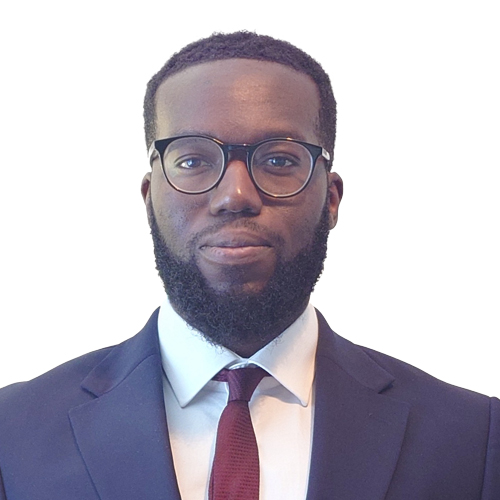
With more than a decade of experience in NHS patient care and service improvement, Tobi Oladipo has built a career spanning specialist clinical practice and strategic leadership, including leading healthcare support for Armed Forces veterans across the North East of England. His work has involved designing new care pathways, building partnerships with charities and military organisations, and mentoring students and junior clinicians.
Now serving as a Lay Member on the AIA Council, Tobi brings the perspective of someone shaped outside the accountancy profession, showing how valuable diverse experience can be in modern governance. His experience reflects AIA’s values of integrity, inclusivity and public interest, offering a fresh lens on the challenges and opportunities facing modern professional bodies. As the accountancy profession navigates technological change and rising expectations around trust and transparency, Tobi’s experiences align strongly with AIA’s commitment to public interest and professional integrity.
In this interview, Tobi shares his journey, the lessons healthcare has taught him, and why effective leadership – across any sector – must remain grounded in empathy, clarity and a focus on people.
You’ve spent over a decade shaping healthcare services. What motivated you to take on leadership roles in the NHS?
From day one, service improvement was part of my role as a clinician. We were constantly encouraged to look at the service before us and ask how care could be better, safer or more supportive for patients, and that mindset stayed with me. Over time, I realised that decisions made at a service level often have a greater impact on patient experience than individual clinical interactions. That insight pushed me to get involved at a broader level.
When the opportunity came up to become Armed Forces Healthcare Lead, it felt like a natural step. It was a chance to take what I had learned in clinical practice and apply it to building something from the ground up. The Armed Forces community has very specific needs, many of which aren’t widely understood. Being able to design a service that recognised those needs, rather than expecting people to fit into existing systems, was a powerful motivator.
It was challenging but exciting. I met people from all backgrounds and heard stories I’d never encountered before. Sometimes the smallest change could make the biggest difference. It reinforced for me that leadership isn’t about hierarchy; it’s about creating environments where people feel seen, supported and able to access the care they need. That’s what kept me pushing forward.
Your trust became a national leader in veteran healthcare. What has been the most rewarding part?
Without question, it has been meeting the people behind the service. I worked with young serving personnel through to veterans in their eighties and nineties, each with a unique story and experience. That diversity shaped my understanding of what the Armed Forces community needs from healthcare.
Often, it wasn’t anything complex. Some people simply needed to be reconnected with a community where they were understood and supported. Others needed help in navigating a healthcare system that can feel complicated when you’re already dealing with health concerns. Seeing their confidence grow as barriers were removed was incredibly fulfilling.
What stays with me most are the moments when you meet someone months later and see how far they’ve come. Knowing the service played even a small part in that progress makes the work feel worthwhile.
As a Lay Member of AIA Council, how does your background outside accountancy help to shape the council’s work?
Many professional challenges are far more universal than we realise. In healthcare, we often look to sectors like aviation for lessons on safety, communication and learning culture, and that cross-sector approach has stayed with me. Having AIA council members from outside accountancy helps to broaden the conversation. It reminds us that issues around trust, transparency and service quality aren’t unique to one profession.
My instinct is always to focus on the user experience. In healthcare, the person in front of you is always the starting point, and I apply that same lens to council decisions by considering how they affect members, students and the wider public. I also bring experience in partnership working and system-level improvement, which helps to balance technical detail with human impact.
Why is it important for AIA to include viewpoints from outside the accountancy profession?
When you stay within one sector for too long, silo thinking creeps in and your perspective can narrow without you noticing. Working with veterans showed me how often people’s needs cut across multiple systems, which forces you to think more broadly.
Diverse professional backgrounds bring fresh ways of approaching challenges. Fresh perspectives can highlight solutions that might otherwise be missed, and innovation often comes from unexpected places. Professional bodies benefit enormously from that diversity of thought. For AIA, it helps to ensure that decisions are grounded not only in technical expertise, but in how they land with members, students and the communities that the profession serves. A wider range of voices makes for a stronger, more balanced council.
What parallels do you see between healthcare and accountancy?
There are more similarities than people might expect. Both sectors are navigating a period of rapid change, particularly around technology. Patients and clients now have immediate access to information, which shapes how they approach professional advice and how quickly they expect answers.
Both professions need to find the right balance with dealing with sensitive information. In healthcare, you must think carefully about what to share, while respecting patient confidentiality. Accountancy deals with similar issues around financial information.
What ties the two sectors together most strongly, though, is the importance of core values. Whether you are working with a patient or a client, both professions are grounded in trust, integrity and good judgment. Technology can support that work, but it can’t replace the importance of acting ethically and making decisions with someone’s best interests in mind.
You’ve worked extensively in integrated care. What lessons could accountancy take from this?
One of the biggest lessons is the importance of co-production. In veterans’ healthcare, we learned very quickly that the patient is the expert in their own situation. When you involve people directly in shaping the support they receive, the outcomes are far better. It shifts the dynamic to working with the patient.
That mindset applies just as well to the accountancy profession. Whether you’re working with a client or developing services for members, understanding their experience and inviting them into the process leads to solutions that feel more relevant and respectful.
Integrated care also taught me the value of bringing all the right people around the table early. Veterans often needed support that crossed several teams and organisations, so collaboration wasn’t optional – it was essential. In accountancy, different stakeholders, regulators, employers and students all have a role to play. When people feel included and informed, they’re more committed to the outcome and more likely to trust the process.
Working in the public interest is a central principle for AIA. How does your healthcare background shape your understanding of this?
In healthcare, acting in the public interest is built into everything you do. You start with the idea of avoiding harm and making decisions that genuinely benefit the person in front of you. That shapes not just clinical work but also how services are designed and how teams operate. You have to be honest, transparent and accountable, because people are placing a huge amount of trust in you at a vulnerable point in their lives. That mindset becomes second nature, and it guides how you approach any professional responsibility.
I see the same principles at work within accountancy. You are safeguarding financial information, supporting businesses and individuals, and helping to maintain confidence in systems that people rely on. My experience with the Armed Forces community reinforced how crucial trust is. Acting in the public interest is similar: it’s about doing the right thing consistently and making sure people can see that you are working in their best interests. That visibility is just as important as the actions themselves.
Looking ahead, what do you hope to contribute during your time on the AIA Council?
I’ve always benefited from the experience and support of others, whether through teaching placements, mentoring junior staff or learning from colleagues who were generous with their time. That has shaped how I approach professional roles, and it’s something I want to bring into my work with AIA. Supporting the development of future accountants feels like a natural extension of what I’ve done throughout my healthcare career.
I also hope to help keep the focus firmly on the member and student experience. In healthcare, you quickly learn that services only work well when you understand the people using them. I think the same principle applies here. If AIA remains closely connected to its members and students, listening to their needs and involving them in shaping what the association does, it will continue to grow stronger. My goal is to contribute to that mindset and help ensure that decisions always take the real-world impact into account.
Finally, what advice would you give to professionals hoping to make an impact beyond their immediate field?
I would say start by keeping a broad perspective. It’s easy to become focused on the demands of your own sector, but stepping back and being open to opportunities often leads to the most meaningful growth. Even when time and resources feel stretched, those constraints can encourage creative thinking and problem solving.
I’d also encourage people to share their experiences, including the challenges they’ve faced. In my work, I’ve found that honest conversations often have a wider influence than expected. You never know who might benefit from hearing your story or learning from something you’ve overcome. Sometimes the impact you make extends far beyond your own profession.
"In both healthcare and accountancy, trust is everything. You have to demonstrate it, not just claim it."
Tobi Oladipo, Lay Council Member, AIA