
This is the sixth annual public report detailing AIA's monitoring and supervisory activities in the United Kingdom and Republic of Ireland, covering the period between 6 April 2025 and 5 April 2026. The report demonstrates how we meet our regulatory requirements, combat economic crime, and support our members in fulfilling their obligations under the Money Laundering Regulations.
During the reporting period, the UK Government continued to progress its plans for reform of the AML supervisory framework, including proposals to establish a Single Professional Services Supervisor. Whilst uncertainty remains regarding implementation timelines, AIA has continued to supervise its members robustly and effectively, ensuring that firms remain focused on compliance with their regulatory obligations and the wider public interest.
The threat landscape facing the accountancy profession continues to evolve. Accountants remain attractive targets for criminals seeking to exploit professional services to legitimise illicit wealth, evade sanctions, conceal beneficial ownership or facilitate complex financial crime. In response, AIA has enhanced its supervisory activity, strengthened engagement with members and continued to take a risk-based approach to monitoring and enforcement.
Throughout the year, we have invested in guidance, training, thematic reviews and supervisory engagement to help firms understand their obligations and implement effective systems and controls. Where serious deficiencies have been identified, we have not hesitated to take appropriate regulatory action.
AIA remains committed to supporting its members while maintaining effective supervision that protects the public, upholds confidence in the profession and contributes to the UK's and Ireland's efforts to combat economic crime.
As a Professional Body Supervisor, AIA is dedicated to both enforcing compliance and educating members on their AML responsibilities. The information presented in this report highlights our regulatory efforts and the effectiveness of our AML monitoring and supervision activities.
AIA's Regulatory Oversight Committee continues to play a crucial role in ensuring our compliance with regulatory requirements and maintaining high standards of governance, providing independent scrutiny and oversight.
George Josephakis, Chair, AIA Regulatory Oversight Committee
The goal of a large number of criminal acts is to generate a profit for the individual or group that carries out the act; criminals employ a range of techniques to clean their 'dirty money'.
Money laundering is the processing of these criminal proceeds to disguise their illegal origin and to make them appear legitimate, allowing criminals to enjoy these profits without jeopardising their source of income. Criminals do this by disguising the sources, changing the form, or moving the funds to a place where they are less likely to attract attention.
Illegal arms sales, smuggling, and the activities of organised crime, including for example drug trafficking and prostitution rings, can generate huge amounts of proceeds.
Money laundering is not only a crime itself, but also a key enabler of other serious crimes such as modern slavery, drugs trafficking, fraud, corruption, and even terrorism.
Professionals working in the accountancy, legal and property sectors are targeted because of their expert skills and services (National Risk Assessment 2025), which can give a cloak of legitimacy to illicit cash. This gives professionals a crucial role to play in protecting the UK’s economy, and wider society by reporting suspicious activity.
While money laundering isn’t always obvious, the consequences are severe. Even accidental involvement in money laundering could mean accountants losing their licence, receiving a fine, or facing criminal prosecution.
See more information on what money laundering is and key obligations for accountants.

Accountancy services are attractive to criminals due to the ability to use them to help their funds gain legitimacy and respectability, as implied by accountants' professionally qualified status. Those providing accountancy services remain at risk of being exploited or abused by criminals, especially if accountants become complacent in their regulatory obligations under the MLRs or willingly facilitate money laundering.
Most accountants work hard to prevent and spot money laundering and take necessary action, however some do unknowingly become involved. The key factors behind unwitting involvement continue to be failing to carry out proper due diligence and adequately train staff so they recognise and report potential money laundering concerns.
A very small number of accountants may knowingly cooperate with criminals to launder money.
AIA supervises its practising members for the purposes of the United Kingdom Money Laundering Regulations 2017 (as amended), where AIA is listed in schedule 1 as an approved supervisory body. In the Republic of Ireland AIA is a designated body under the Criminal Justice (Money Laundering and Terrorist Financing) Act.
Our work is overseen by HM Treasury, the Office for Professional Body AML Supervision (OPBAS) and the Republic of Ireland Departments of Finance and Justice.
We monitor our supervised population and take measures where necessary to ensure compliance, including:
We take appropriate measures to ensure we review:
We enforce the money laundering regulations and carry out our work as an AML supervisor through:
We work with other professional body supervisors, law enforcement, and regulators in the UK through:
We work with other professional body supervisors, law enforcement, and regulators in the ROI through:
The Regulatory Oversight Committee deals with scrutiny, oversight and review of the AIA's regulatory requirements as a recognised supervisory body under the Money Laundering Regulations.
The Committee is empowered to make recommendations to the Council to address areas of weakness or highlight areas of good practice relating to AIA’s AML supervision.
The Committee is made up of independent subject-matter experts. An extra layer of independent scrutiny provides added assurance and drawing on the broad experience of a range of industry professionals helps bring in new thinking from outside AIA.
Find out more on the work and terms of reference of the Committee.
The Regulatory Oversight Committee reports directly to AIA’s Council, which is AIA’s decision-making body responsible for ensuring we deliver the objectives outlined in our Constitution and meet our regulatory and statutory requirements.
AIA operates a risk-based approach to AML supervision. When applying for a practising certificate, applicants agree to co-operate with AIA with our Quality Assurance and Practice Monitoring process.
AIA's monitoring and supervision work ensures compliance with the AIA Constitution, Public Practice Regulations and legal and regulatory requirements including the Money Laundering Regulations.
The following tools are used to test members' compliance:
Where members are found to be non-compliant with the MLRs, depending on the impact and severity of non-compliance, an Action Plan is agreed to achieve compliance.
Where members exhibit serious non-compliance, act contrary to the AIA Constitution or fail to make adequate progress to achieve compliance, AIA undertakes regulatory action which includes the creation of an Action Plan and financial penalties. Failure to rectify deficiencies results in referral to AIA's Practice Compliance Committee and Disciplinary Committees which may sanction an individual or firm in line with the AIA Constitution and Sanctions Handbook using the following available options:
AIA's supervised population is made up of a subset of its overall Members in Practice population.
Some Members in Practice are supervised by other professional body supervisors (PBSs) where joint membership is held and this has been agreed with another PBS. AIA works with other members of the Accountancy AML Supervisors’ Group (AASG) to ensure all members are appropriately supervised.
As a professional body supervisor, we make sure that the relevant firms and individuals we supervise comply with the regulations and have appropriate controls in place to prevent money laundering.
In addition to providing pure accountancy services, a proportion of AIA supervised members undertake Trust or Company Service work. A Trust or Company Service Provider (TCSP) is any firm or sole practitioner whose business is to:
A person is still considered to be a TCSP provider even if these services are provided incidentally to other accountancy services, or they are provided infrequently or on a one-off basis.
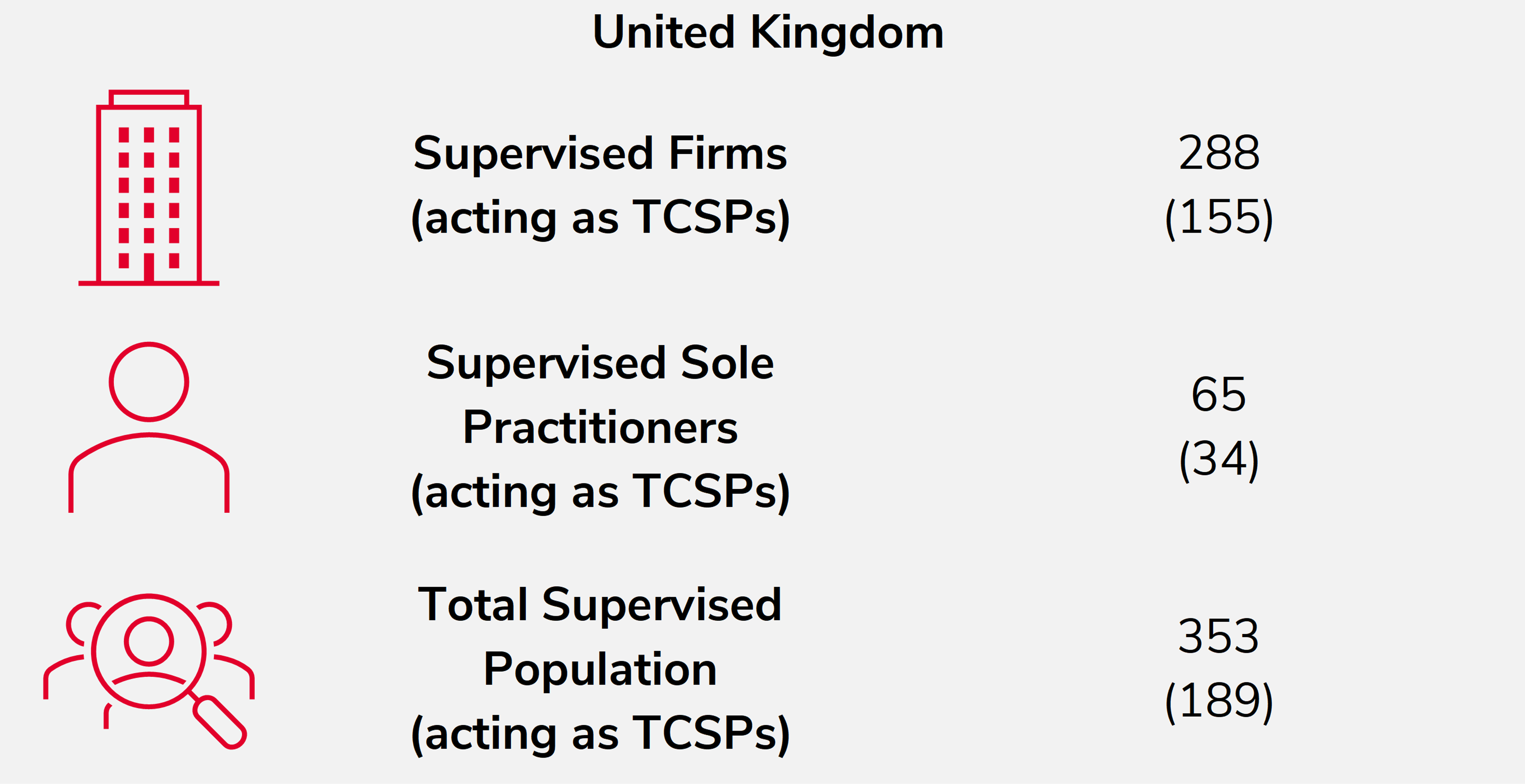
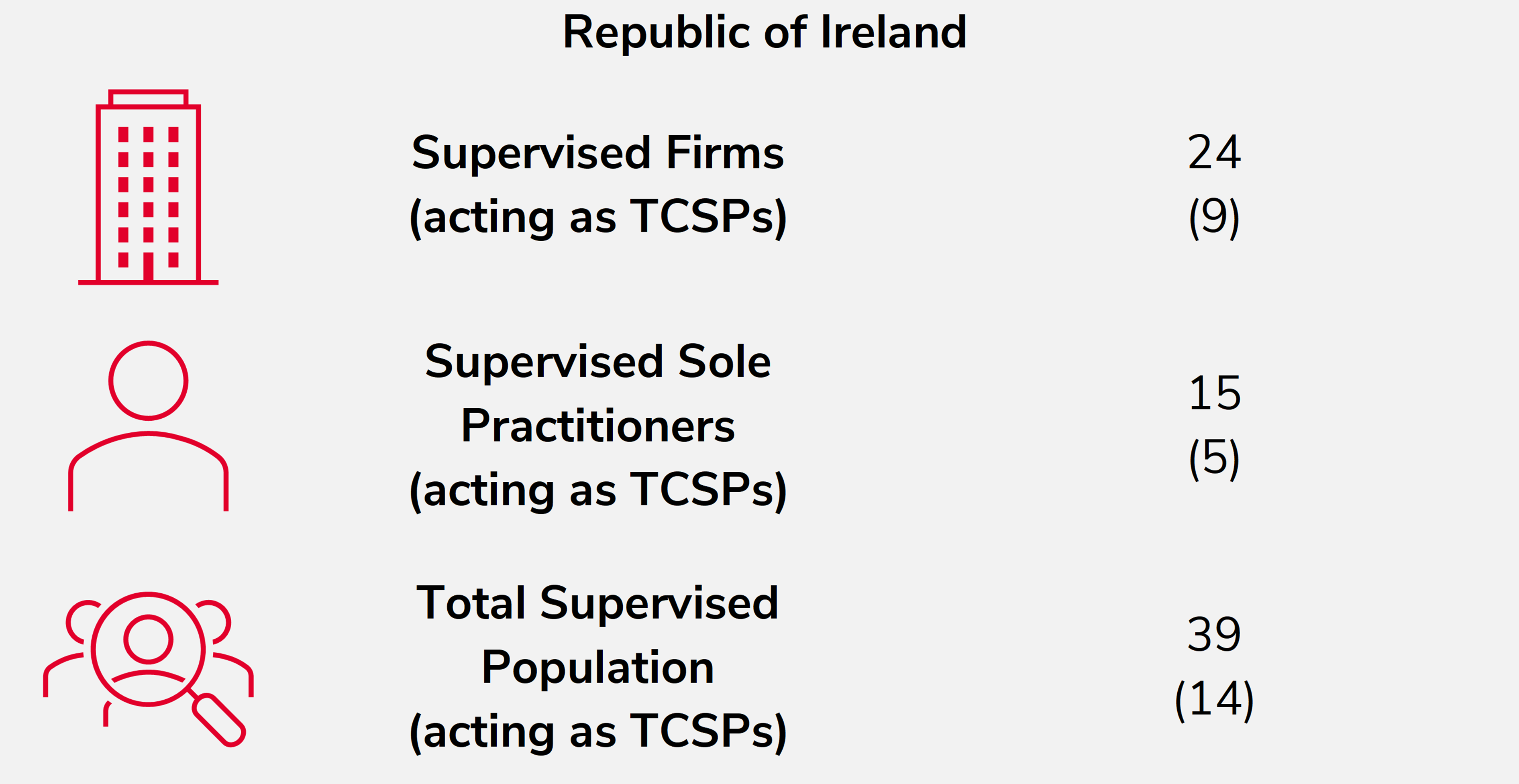
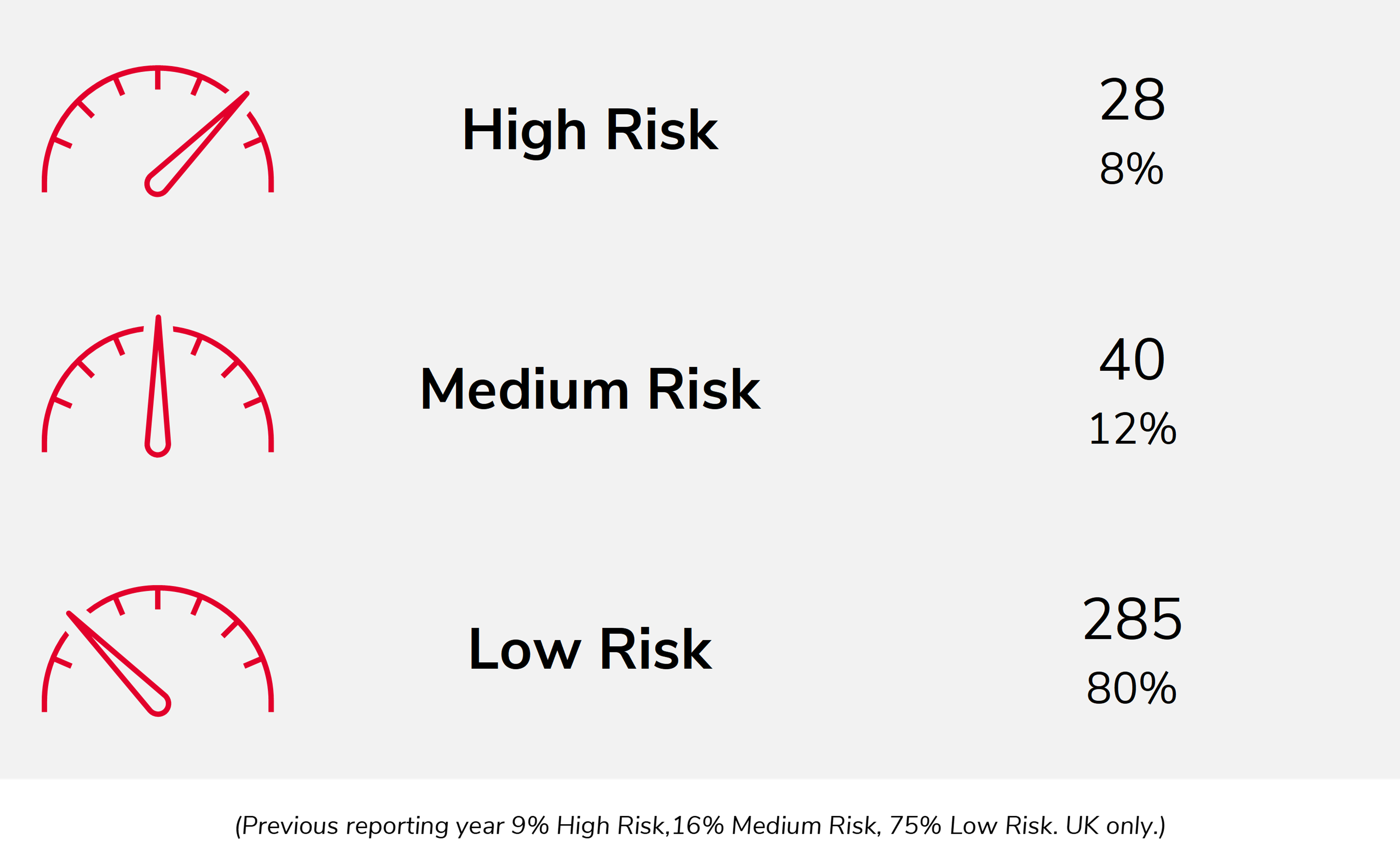
The money laundering regulations require that professional body supervisors create risk profiles for all regulated firms and individuals - High, Medium and Low. We use these profiles to identify money laundering risk and prioritise our monitoring and supervision.
Our risk-based approach methodology is controlled by a policy independently scrutinised by the Regulatory Oversight Committee and looks at a range of factors to determine risk, including regulatory history, size, clients and services provided. It also considers mitigation such as AML controls and compliance history.
We take monitoring and supervision action and review firms of all risk levels, prioritising higher-risk firms, as part of our risk-based approach.
Low AML risk does not mean no AML risk.
The MLRs require all beneficial owners, officers and managers (BOOMs) acting in an AIA supervised firm to be approved by us. They must get a Disclosure and Barring Service check and submit it to us when they first become a BOOM or take on a new role. This ensures that at the time of application the individual has no convictions for a 'relevant offence' as defined in Schedule 3 of the MLRs.
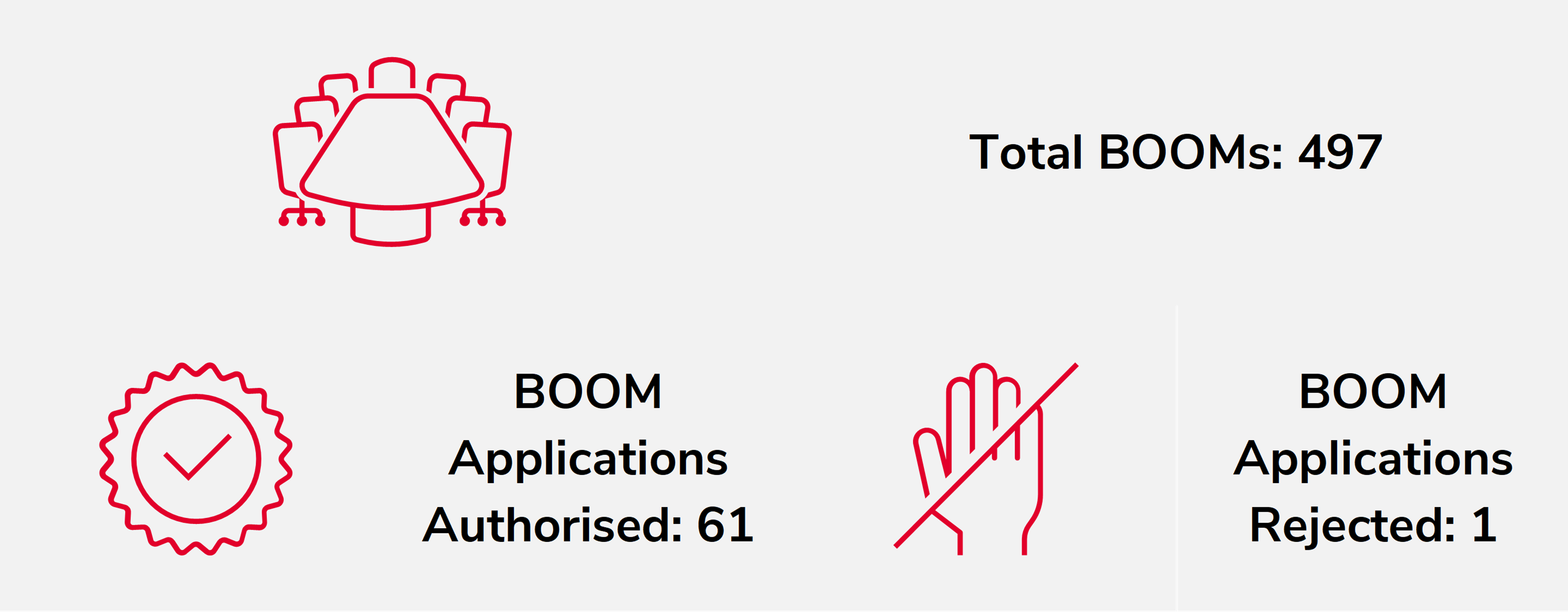
In the reporting period AIA authorised a total of 497 BOOMs (Previous reporting period: 487). This number fluctuates due to member retirements, disciplinary action or applications and depends how many BOOMs are present within individual firms.
62 applications for authorisation to act as a BOOM were received and 1 application was rejected. 1 BOOM authorisation was invalidated by disciplinary measures.
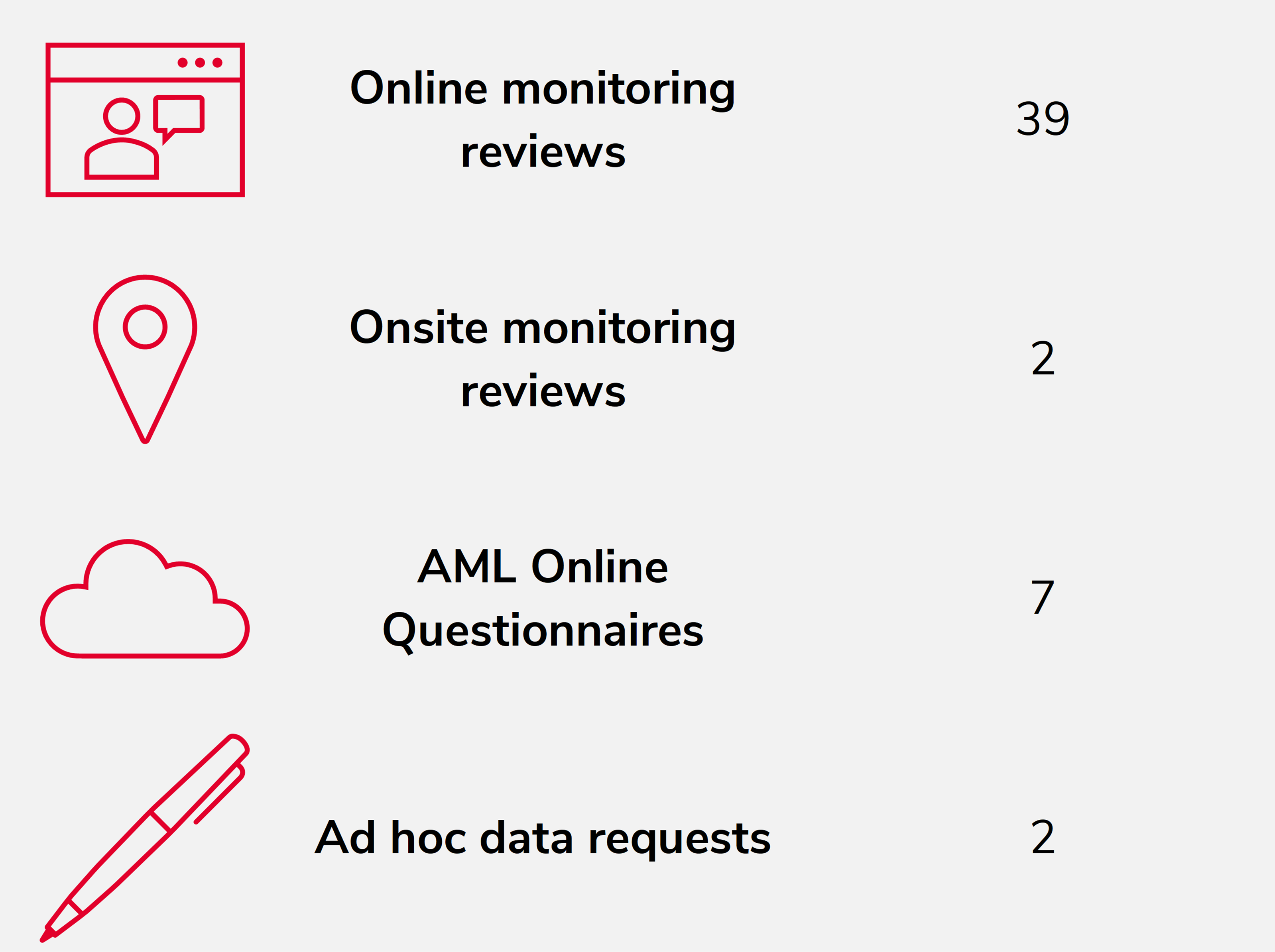
We undertook 48 Desktop Monitoring, AML Compliance Reviews, Onsite Monitoring Reviews or AML Online Questionnaires in the reporting period.
In addition, we undertook other targeted specific or ad hoc data requests.
The monitoring and supervision activity outlined above was conducted alongside thematic reviews, desk-based monitoring and individual requests made to members. For example, we worked with law enforcement agencies or made ad hoc data requests relating to members acting as verification agents for the Register of Overseas Entities.
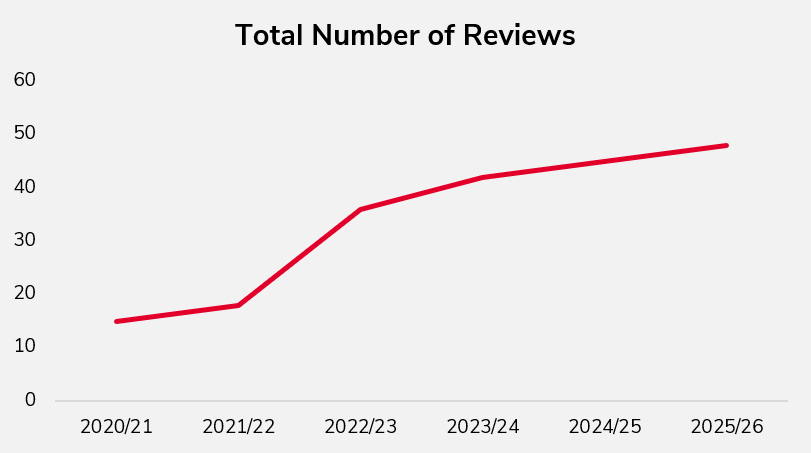
AIA continues to investigate significant time and resources increasing the monitoring and supervision of members. Reviews conducted in 2025/26 represented 14% of firms receiving a Desktop Monitoring Visit, AML Compliance Review or Onsite Monitoring Visit.
During a Desktop Monitoring, AML Compliance Review or Onsite Monitoring Visit we:
Through our AML Online Questionnaires we:
AIA operates a continuous improvement strategy to continue to deliver effective supervision. Improvements during the reporting period included:
We have identified key risks within our supervised population include:
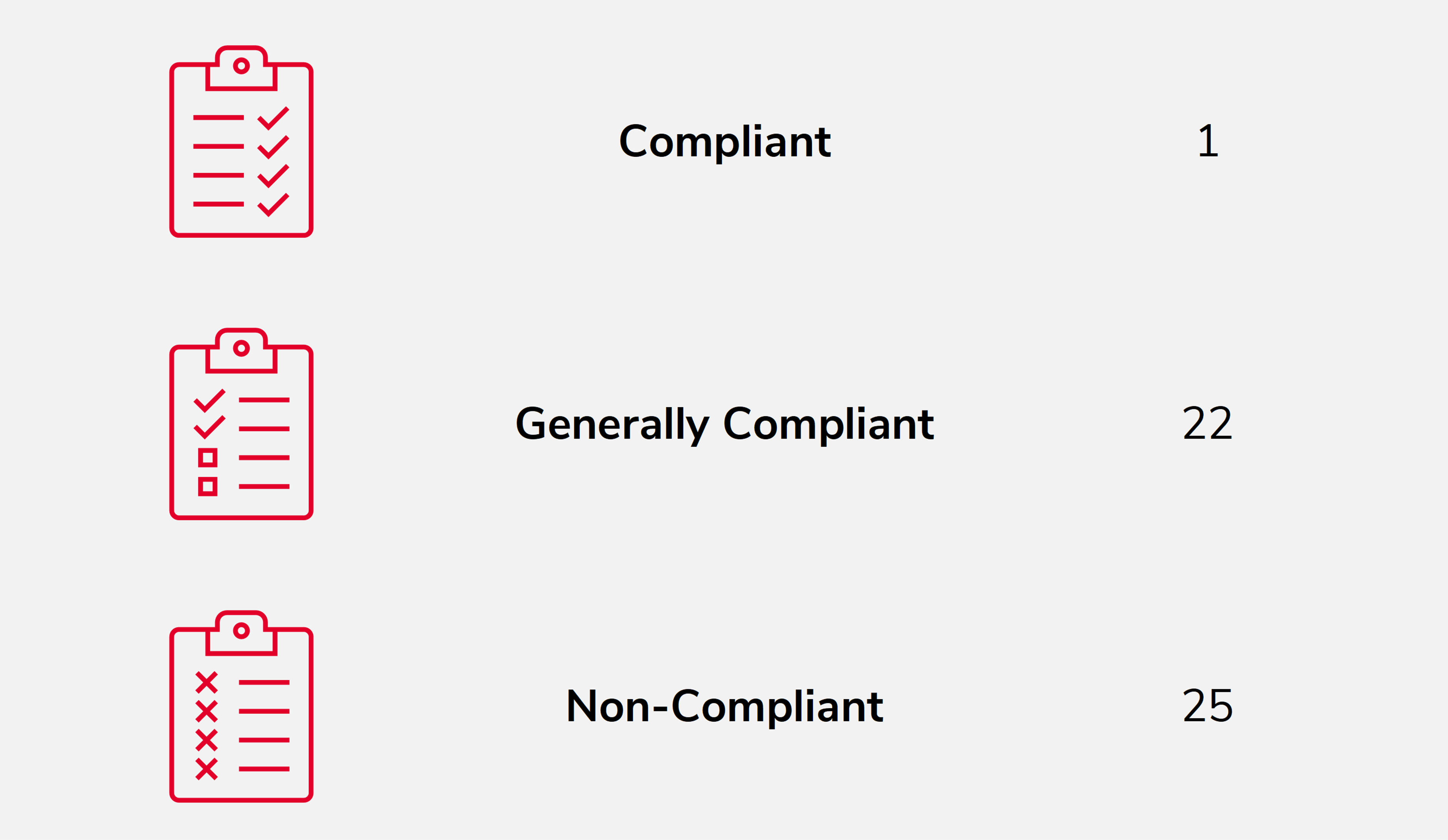
Our visits found the following levels of compliance with the MLRs among the supervised firms we reviewed as part of our monitoring and supervision activity. These figures relate to initial findings made in reviews prior to completion of any Action Plan of required or recommended actions provided to the member in a Findings Report:
Since 2023 we have collected enhanced data on the themes behind non-compliance at firms resulting from monitoring and supervision activity. In the reporting year themes included:
The most common forms of non-compliance with AML/CTF obligations identified throughout AIA’s supervisory activities include:
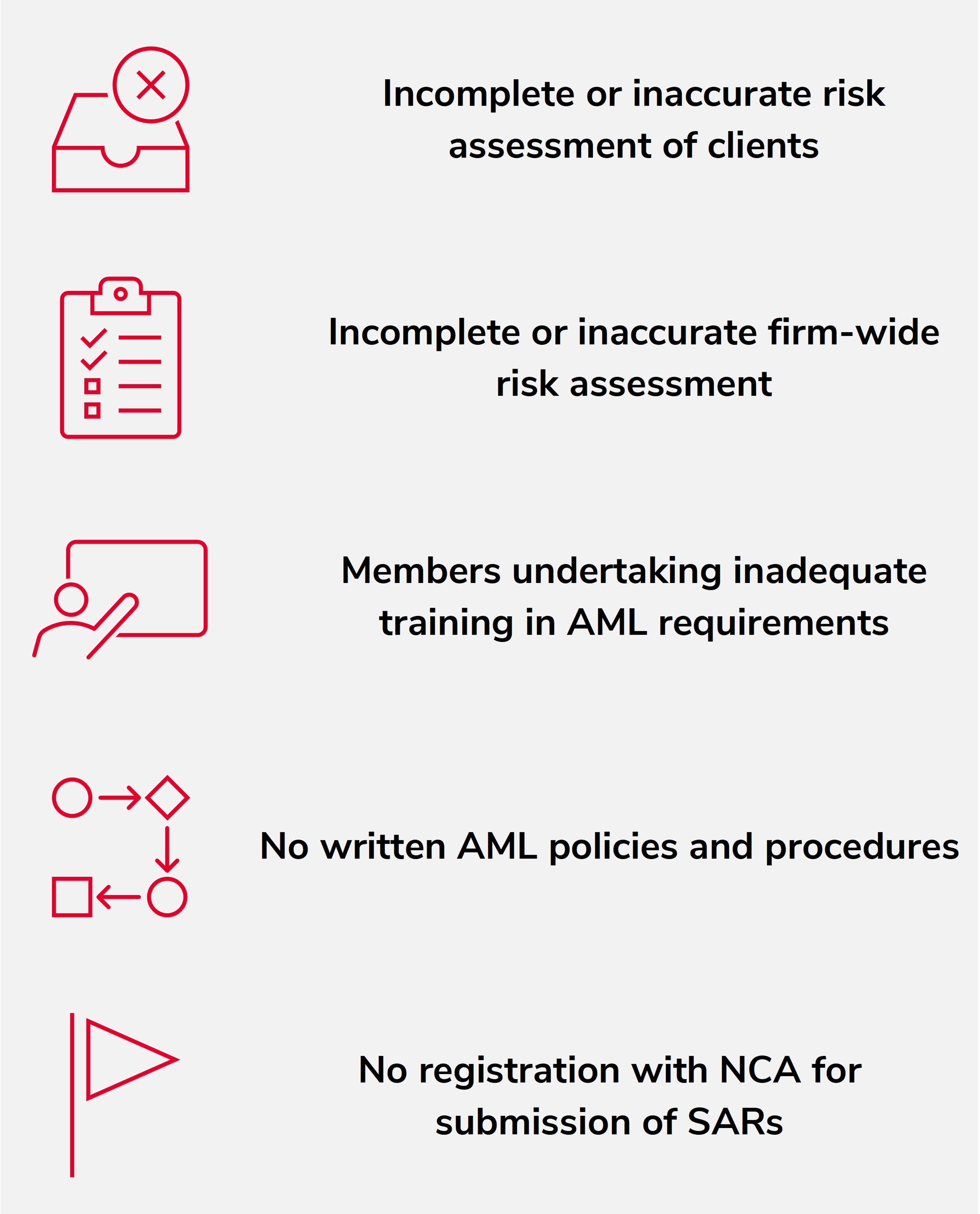
The most common form of non-compliance relates to inadequate documented policies and procedures. AIA has undertaken targeted training on policies, controls and procedures in 2026, including webinars and refreshed guidance. A thematic review is currently underway at the time of publication of this report.
A common form of non-compliance identified during reviews is where members have failed to register with the National Crime Agency (NCA) to submit Suspicious Activity Reports on the NCA Portal. This is often because members feel they are not required to register until the moment they need to submit a SAR and that the frequency of SAR submission is low.
During monitoring reviews, examples of effective AML compliance were also identified, including:
Following the monitoring and supervision action in the reporting period AIA undertook 110 informal actions (implementing an Action Plan for compliance for members and enforcing compliance) and 66 formal actions (including revoking practising certificates and excluding members). 10 members were excluded from membership.
57 fines were levied in the reporting period totalling £59,100 (Previous reporting year: 59 fines, £33,050).
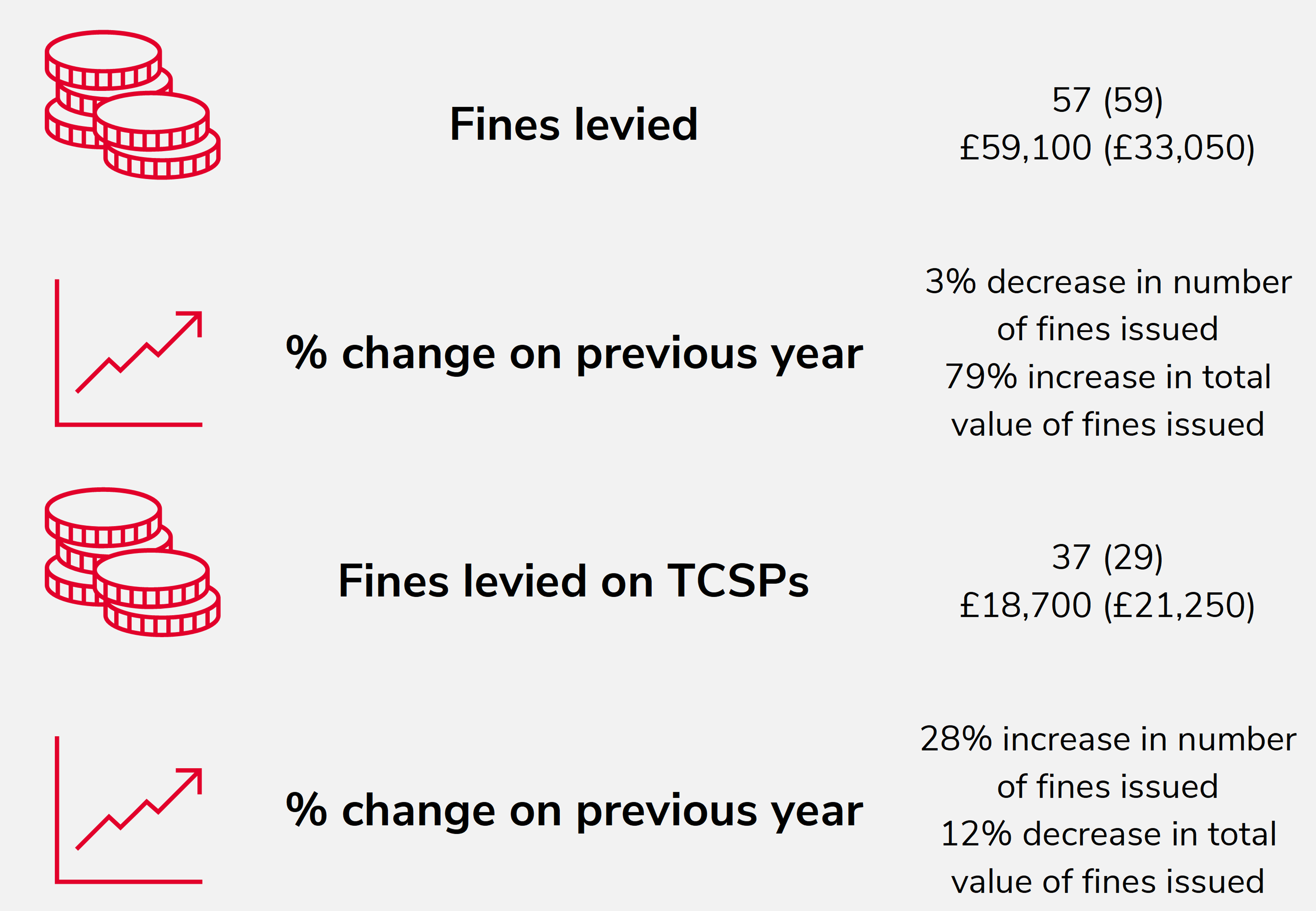
AIA issued a similar total of fines relating to AML non-compliance for firms providing solely accountancy-related work. This is due to the structure of AIA’s Sanctions Handbook which provides clear guidance for available monetary sanctions to disciplinary committees.
The figures reported above for TCSPs represent an increase in the number of fines levied and decrease in the total value of fines levied.
These metrics are dependent on non-compliance identified remaining unrectified or fines issued by AIA’s Disciplinary Framework in line with the Sanctions Handbook. There is therefore no specific target number of fines or total amount of fines to be issued as this is a variable figure dependent on several factors.
Fixed Penalties
7 fixed penalty fines were issued (averaging £543) where members failed to correct areas of non-compliance within a deadline set by an action plan following a monitoring review.
For example, where a monitoring review identified that a member had failed to produce an adequate firm-wide risk assessment this would be noted on the Findings Report of the review and an Action Plan issued to the member with a deadline for providing evidence. Where a member fails to meet an initial deadline, a penalty is issued and the member must pay their fine and submit evidence as required in the original Action Plan by a new deadline to avoid referral to AIA’s Practice Compliance Committee.
Case Study
An AIA Member in Public Practice was fined £500 and referred to the Practice Compliance Committee (PCC) in January 2026 after failing to renew his AIA membership and Practising Certificate for 2025/2026. Despite five email reminders and a telephone call, no response had been received from the member.
The PCC found the following allegations proven; (i) Non-payment of the annual membership subscription fee, (ii) non-renewal of his Practising Certificate for 2025/2026 and (iii) failure to pay the associated regulatory fine.
The Committee noted that the member had previously been referred to the PCC in February 2025 for similar non-renewal issues, although that referral was withdrawn after he complied with the requirements. This previous referral and his current non-payment of the regulatory fine were treated as aggravating factors. No mitigating circumstances were identified.
The PCC ordered that within 21 days the member must complete the renewal of his Practising Certificate. He was also to receive a reprimand and a further fine of £1,000. Failure to comply with this latest order would result in referral to the Disciplinary Committee.
The member did not comply with the PCC order, did not submit an appeal, and provided no further communication. The matter was subsequently referred to the Disciplinary Committee for consideration.
The Disciplinary Committee noted that the member's firm remained active on Companies House and concluded that his failure to engage with his professional body prevented AIA from meeting its obligations under the Money Laundering Regulations.
The committee ordered that the member was to be excluded from AIA membership pending appeal.
The member then emailed a letter to AIA outlining his current circumstances. However, the correspondence did not meet the Association’s requirements for a formal appeal under the AIA Complaints, Disciplinary and Practice Compliance regulations.
Under this framework, an appeal may be properly advanced where there has been procedural irregularity or unfairness in the conduct of the proceedings, where the decision or sanction imposed is unreasonable or disproportionate having regard to AIA’s Sanctions Handbook, and/or where new and material evidence has emerged which could not reasonably have been presented to the Disciplinary Committee at the time of the hearing.
No further correspondence which met these criteria was received.
The disciplinary order was enforced and the member notified of his exclusion. HMRC was notified of the outcome, which was subsequently published on the AIA website.
Feedback from members on our monitoring and supervision activity
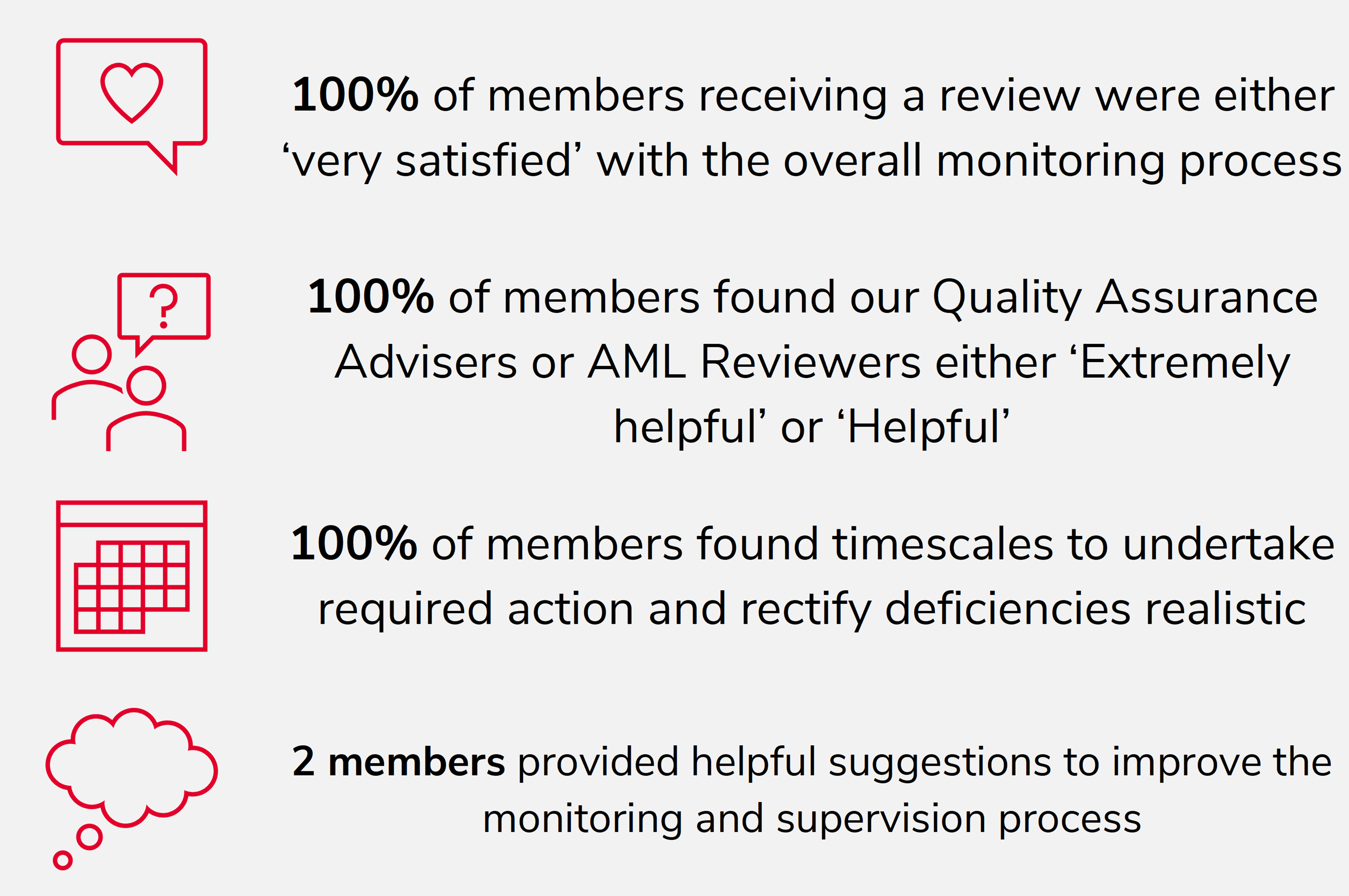
Following each monitoring review AIA issues a feedback survey to members seeking views on how we can improve our process.
We have a dedicated money laundering reporting officer and deputy to meet our obligations to identify and report suspicions of money laundering.
AIA submits suspicious activity reports (SARs) to the National Crime Agency (NCA) if we identify a suspicion of money laundering through our monitoring and supervision.
To support this vital work, we regularly train and update all relevant staff and reviewers to recognise the red flags of money laundering and how to report them. We review the quality of SARs filed by our members during Monitoring Reviews where records have been kept and make recommendations to aid improvement.
Where we see trends in criminal activity or suspicious activity in the course of our monitoring and supervision we work with other professional bodies through the Intelligence Sharing Expert Working Group (ISEWG) to issue alerts to the profession and set out appropriate indicators.
In January 2026 we issued our third public report on SARs reporting by AIA members, ‘Suspicious Activity Reporting Trends 2025-26’, detailing information on SARs submitted by AIA’s supervised population and their general categorisation to identify useful trends.
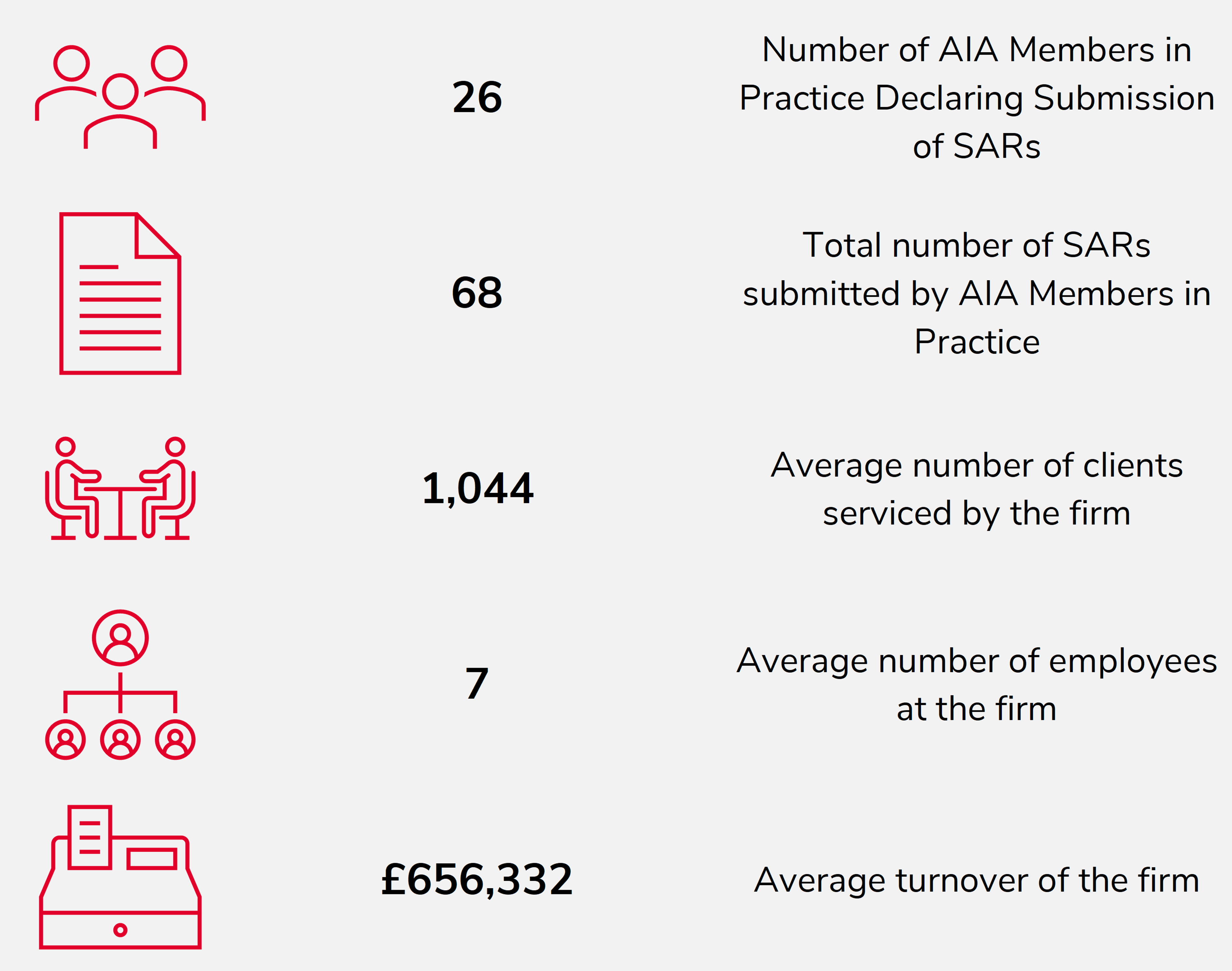
As part of the Annual Declaration AIA requires firms who have indicated a submission of a Suspicious Activity Report must explain, in general terms, the reason for their suspicion and report. The following themes linked to money laundering suspicion were identified during the 2025/26 renewal period:

AIA has a dedicated whistleblowing hotline and email address for money laundering disclosures.
This means we can be alerted by members of the public in a confidential way about occasions of non-compliance or potential involvement in money laundering or terrorist financing where AIA members are involved. No AML-related disclosures were received in the reporting year.
We remain committed to ensuring that these serious matters can be disclosed confidentially, and we have strict policies in place to maintain anonymity.
Anyone who wishes to make a confidential report about an AIA member or firm can do so if it is known or suspected that they:
If members of the public wish to report an individual or firm whose supervisor for AML purposes is AIA they can report the matter confidentially to our team.

Threats and emerging risks relating to money laundering and terrorist financing activity are changing constantly. Updated information is provided to AIA Members in Practice through a variety of channels to mitigate these risks.
AIA’s AML Sector Risk Assessment for Money Laundering and Terrorist Financing in the United Kingdom and the Republic of Ireland sets out information on money laundering and terrorist financing risk that is considered relevant to those individuals and firms supervised by AIA and informs AIA’s risk-based approach to supervision.
AIA’s sector risk assessment and risk-based approach has been developed considering guidance from the United Kingdom National Risk Assessment, the Republic of Ireland National Risk Assessment, the Financial Action Task Force Guidance for a Risk Based Approach for the Accounting Profession and updates from UK and EU authorities.
AIA assesses emerging risks through a range of sources, including:
Where we receive information on emerging risks we provide structured alerts to AIA members to inform their training, often in collaboration with other professional body supervisors. AIA members are strongly recommended to read these alerts and take appropriate reporting action if they come across situations that involve the circumstances described.
To some extent during the reporting period the risks identified remained similar to those previously identified. We have seen a continued reliance on third-party client due diligence software to undertake client verification and due diligence. We would expect firms to be aware of the limits and risks associated with using third-party software and have issued guidance related to this risk.
Building on the previous reporting period we consider that other current areas of emerging risk may continue to include:
Following the growing international focus on proliferation financing, AIA continued to raise awareness of the risks associated with sanctions evasion and the financing of weapons proliferation.
Members were encouraged to consider proliferation financing within their firm-wide risk assessments, undertake appropriate screening activities and ensure policies and procedures were updated accordingly.
Artificial intelligence continues to present both opportunities and risks for the accountancy sector.
AIA observed increasing use of AI-enabled technologies by firms to support onboarding and client due diligence activities. At the same time, criminals are increasingly exploiting sophisticated technology to create false documentation, synthetic identities and deceptive communications.
AIA will continue to monitor these developments and provide guidance to members as risks evolve.
In the coming year AIA will continue to support supervised firms and members to help them put strong controls in place to prevent them from being used by criminals. This includes providing updated member guidance, CPD events, intelligence alerts and updating information on emerging risks.
We will also continue to take robust action where our firms and members are found to be failing to protect themselves and the wider public in their responsibilities under MLR.
We will continue to undertake an appropriate and effective risk-based approach to monitoring activity as we employ Onsite Monitoring Visits and leverage the flexibility of Desktop Monitoring Reviews and AML Online Questionnaires.
AIA will continue to focus on maintaining effective risk-based supervision while supporting members through an evolving regulatory landscape.
Key priorities for the coming year include:
Regardless of future supervisory arrangements, AIA remains committed to protecting the public interest and supporting members in preventing money laundering, terrorist financing and wider economic crime.

In the coming year we intend to:
Published by AIA:
AIA maintains extensive AML guidance for members, including sensitive AML alerts and emerging risks, templates and checklists, and events, within the members' area of the website.
Examples of guidance we provide include:
AIA maintains a library of AML-related articles for members to access on demand, for example:
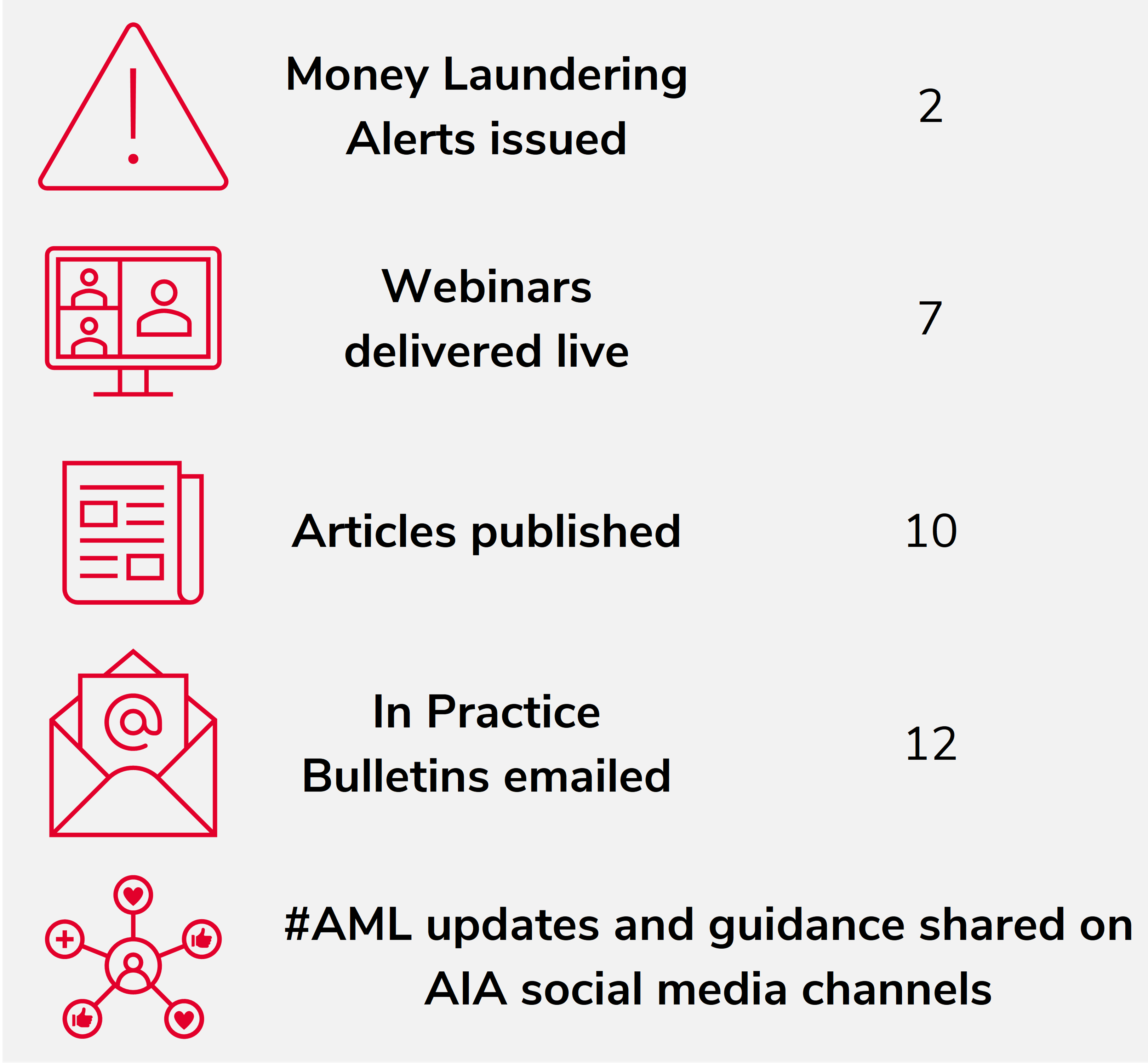
As part of an alerts sub-group of the Intelligence Sharing Expert Working Group (ISEWG) we issued 2 accountancy-specific money laundering alerts to Money Laundering Reporting Officers of our supervised firms and the wider sector.
During 2025-26, AIA continued to invest in innovative tools to support members in meeting their anti-money laundering and counter-terrorist financing obligations. As part of this commitment, AIA launched the AI AML Adviser, an AI-powered compliance support tool available through the member portal, providing members with instant access to practical AML guidance and regulatory information.
The AI AML Adviser was developed to complement AIA's existing supervisory, monitoring and educational activities by improving access to information and helping firms address day-to-day compliance queries efficiently and consistently.
By providing immediate access to AIA guidance and regulatory resources, the AI AML Adviser helps firms strengthen their understanding of AML requirements, supports informed decision-making and encourages a proactive approach to compliance.
The launch of the AI AML Adviser forms part of AIA's wider strategy to utilise technology to enhance professional standards, strengthen compliance outcomes and support members in responding to an increasingly complex financial crime environment. While the tool does not replace professional judgement or legal advice, it serves as an accessible first point of reference, helping practitioners navigate AML obligations with greater confidence and efficiency.
Since its launch, the AI AML Adviser has become a key component of AIA's member support framework, complementing monitoring visits, AML reviews, guidance publications, webinars, thematic reviews and direct regulatory engagement. Together, these initiatives contribute to AIA's risk-based supervisory approach and its ongoing efforts to protect the public interest and combat economic crime.

Published by the National Crime Agency:
Published by Government:
Note: AIA’s responsibilities as a professional body supervisor under Schedule 1 of the Money Laundering Regulations 2017 involve the handling of sensitive intelligence and information which is used to combat the risk of money laundering and terrorist financing. This Annual Report does not include all aspects of AIA’s monitoring and supervision strategy and some information may not be disclosed to protect the public interest.